
18th Century STAYS Patterns
Custom Drafted using the Arc Method
ARE YOU FINDING IT DIFFICULT TO CHOOSE THE RIGHT PATTERN FOR YOUR 18TH CENTURY STAYS?
WORRIED ABOUT WHETHER THEY’LL FIT YOU CORRECTLY?
OR HOW TO ALTER THE PATTERN IF THEY DON’T FIT “RIGHT OUT OF THE PACKET”?
Let me set you up for success!
A custom-drafted stays pattern factors in the precise angles of your unique body, as well as the correct lengths and circumferences.
This means you will spend far less time and materials (and “brain-ache") on trying to figure out why your stays made from a standard commercial pattern don’t look right, support you or feel comfortable.
This offer is for a CUSTOM pattern to be drafted SPECIALLY FOR YOU, for you to use in building your own 18th century stays.
The service includes:
1 - EITHER an in-person session where I take your measurements OR a video call for me to direct you in taking your measurements (for which you will need to enlist a friend or family member to assist).
2 - a discussion to establish your requirements, including the style you desire and any issues arising from your intended use.
3 - my drafting a paper pattern for you, ready for you to use for your own staymaking project.
4 - if required and applicable, I will include a note of the historical style of your stays, by time and place (for example, mid-century English) and any similar extant stays in museum collections.
PRICE: £250.00
To book, contact me to discuss your requirements and availability.
I will then send you an invoice with payment options. I no longer accept card payments via this website.
HOW I DRAFT CUSTOM PATTERNS FOR 18TH CENTURY STAYS:
I use the “arc" method” of pattern drafting used by staymakers in the 18th century, as described in Patterns of Fashion 5 published by The School of Historical Dress and taught by Luca Costiglioli. I learned this method in a workshop at The School, taught by Luca himself.
The pattern I draft for you will be based on a documented period style. I will draw it on robust kraft paper and post it to you as a full set of pattern pieces (along with a master drawing). The pattern pieces will be marked with grainline, seam allowance recommendations and my suggestion for eyelet placement.
HOW YOU USE THE PATTERN:
You may use your pattern as you see fit. You might wish to make your stays with modern techniques — such as for social costuming or theatrical wear — or you might aspire to building stays as historically accurate as possible — or you may decide on a mixture of both. It’s your choice! Whatever your purpose or approach, I recommend making a mock-up, just as with any other pattern, to test not only the fit but the feel on your body and the behaviour of your planned materials. No two bodies are exactly the same, even if all the measurements are identical! And the materials you choose to use can affect fit and comfort as well. This means even a custom-drafted pattern cannot be 100% guaranteed to fit perfectly on the very first try. But a bespoke pattern is the best first step towards the perfect pair of stays for you.
Depending on your needs and priorities, you may find free online sources of advice and tips for making a mock-up, for example YouTube videos, even a Facebook group where people offer advice and feedback. Please do bear in mind, what you get for free on the Internet is not comparable to personalised service from a trained professional.
Please note: You are purchasing a physical product that is the end result of a personalised service provided to YOU, and YOU ONLY. I retain all intellectual property rights created in the design and making of your pattern.* With your purchase, I give you permission to make as many garments from the pattern as you like, to amend the pattern for your personal use and to commission the making by someone else of stays according to this pattern, but you may NOT make copies of the pattern for sharing or distribution to anyone else, without my express written consent.
THIS SERVICE does NOT include:
– advice or instructions for making your mock-up or the final stays;
– assessing or giving feedback on the fit of any current/old stays you may have, or the fit of any mock-up or final stays made from the pattern I draft for you;
– changes or alterations to the pattern I draft for you;
– making your mock-up;
– making your stays;
– pattern drafting or draping for any other garment e.g. fitted gown;
– advice on designing, planning or styling the rest of your outfit.
I CAN OFFER ANY OR ALL OF THESE SERVICES SEPARATELY as consultancy, teaching/tuition, or as bespoke commissions to make items for you – please contact me for further details if interested.
* All rights are reserved, subject to the laws of England and Wales.
1
Case Studies: Here’s what a custom pattern can do for you.
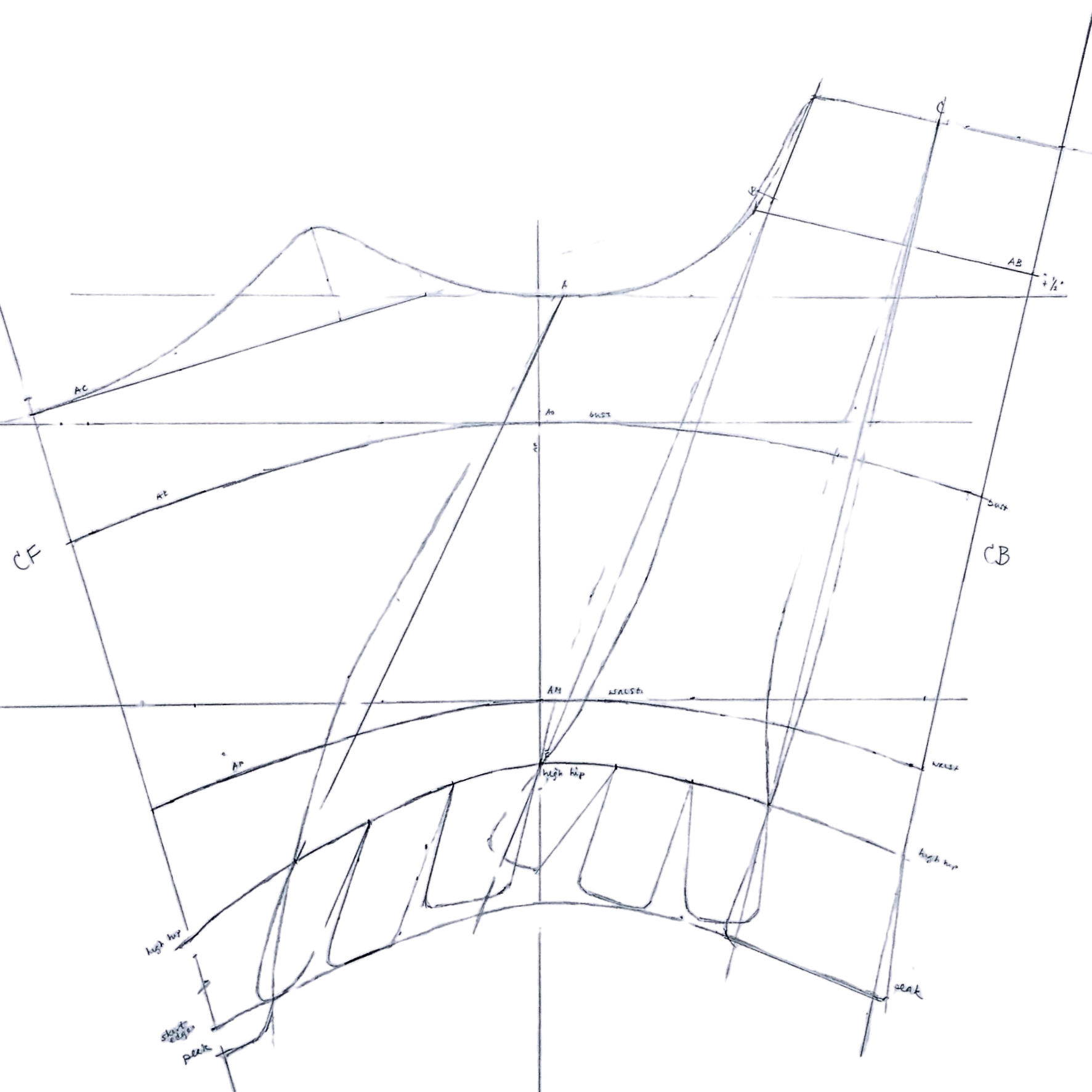
The master pattern I drafted for her
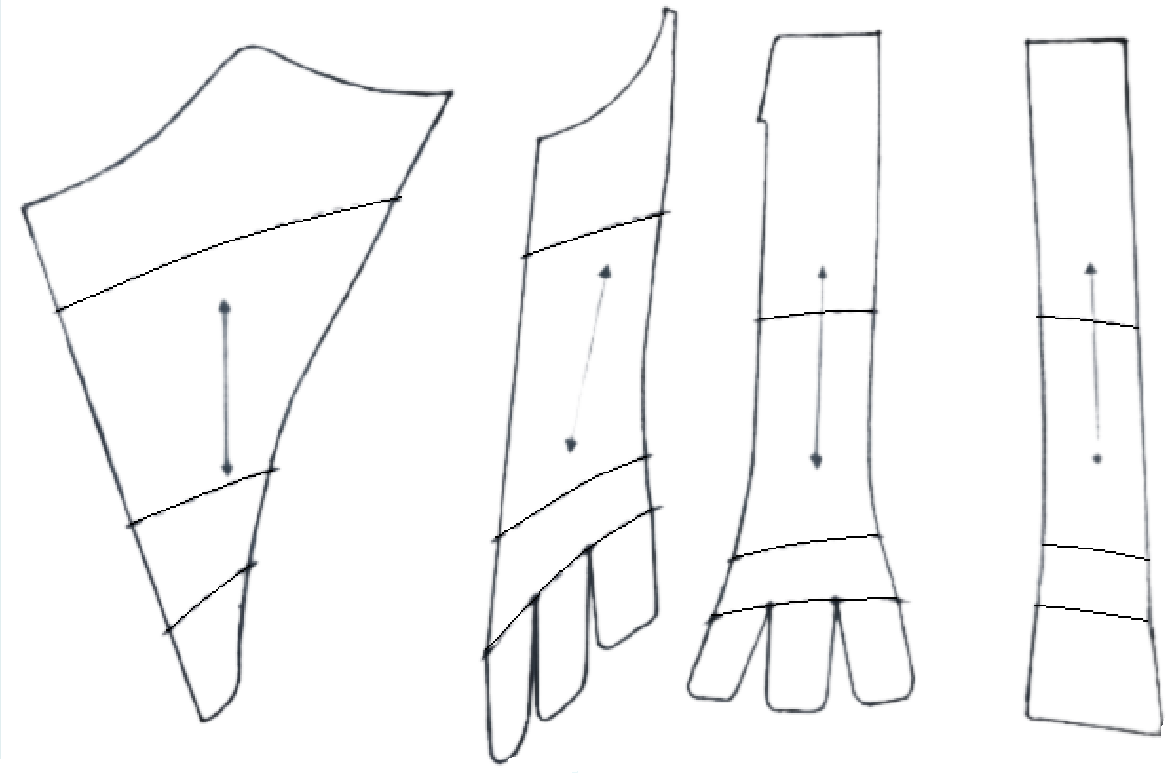
The customer is a living historian who needs to be able to interpret every aspect of 18th century clothing with the public, including talking knowledgeably about how period stays looked and felt to wear. I drafted this custom pattern for a pair of stays based on a 1760s stays example published in ‘Patterns of Fashion 5’ (pages 100-103).
The panels separated out, with grainlines marked
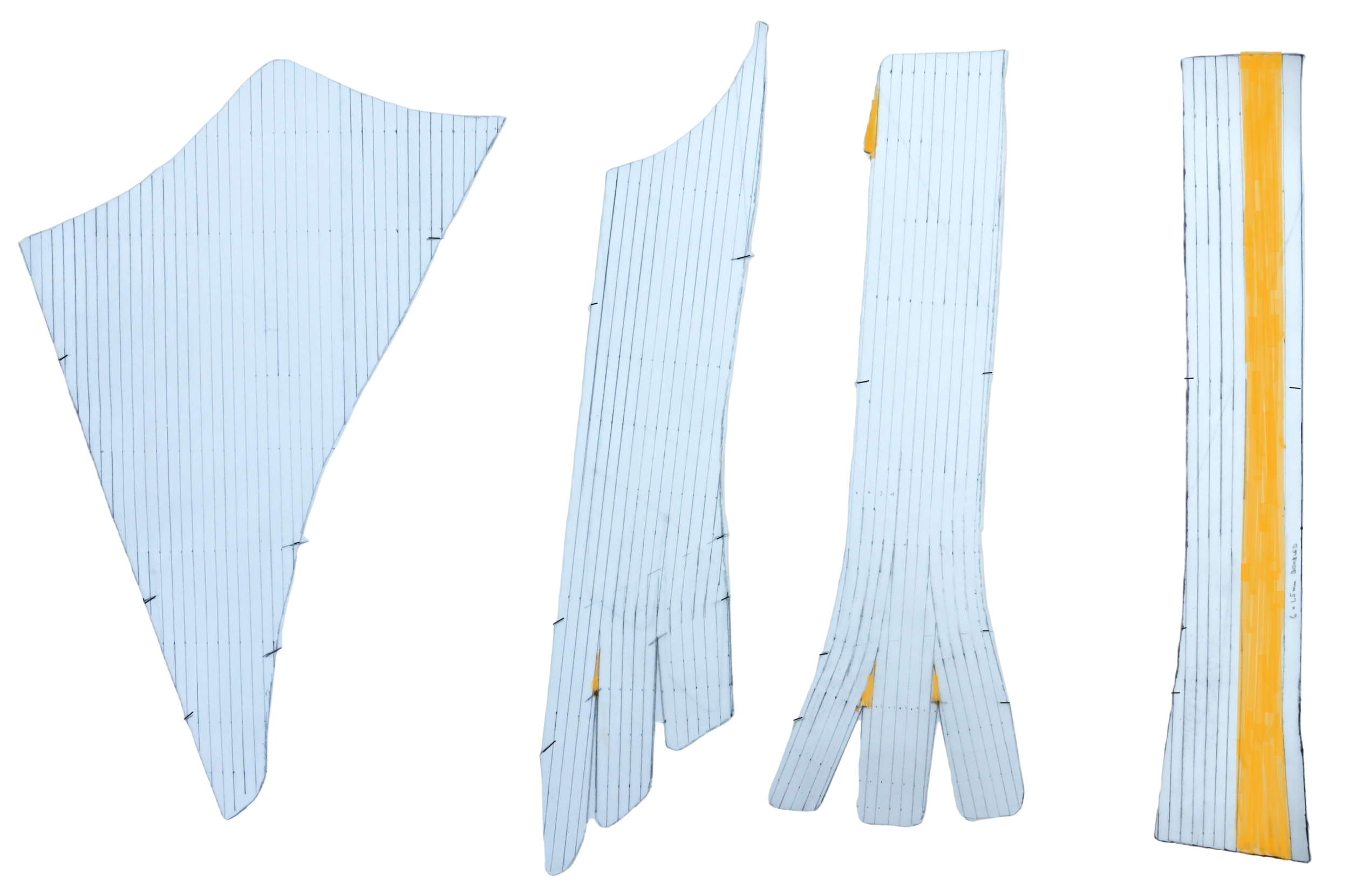
A separate trace-over, with boning channels and eyelet band marked out
Here is the FIRST mock-up she made from this pattern.
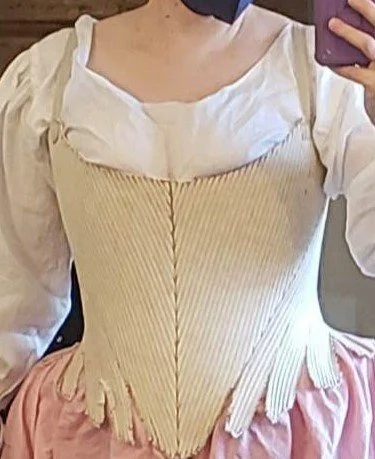
Photo: Sarah Walsh, 2023
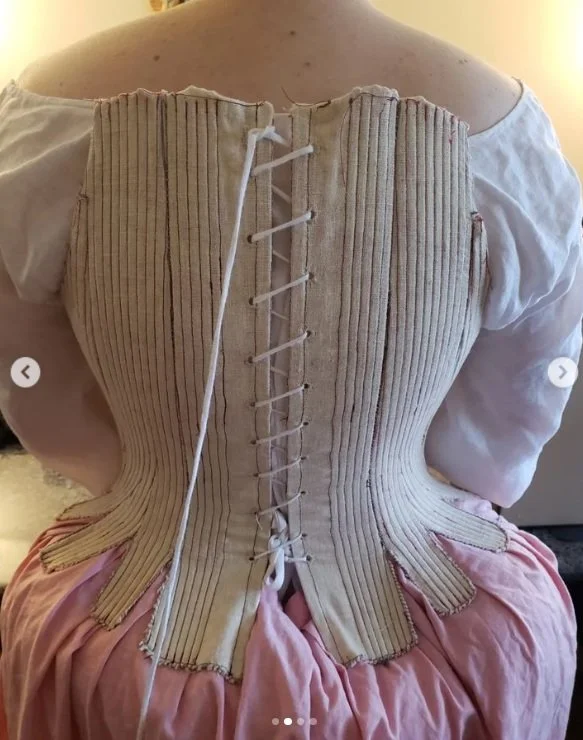
Photo: Sarah Walsh, 2023
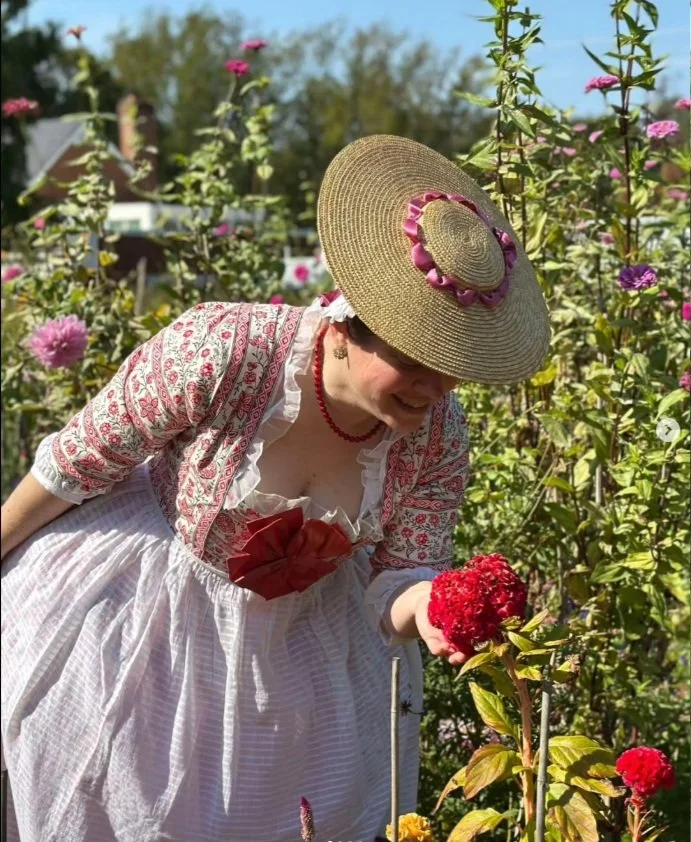
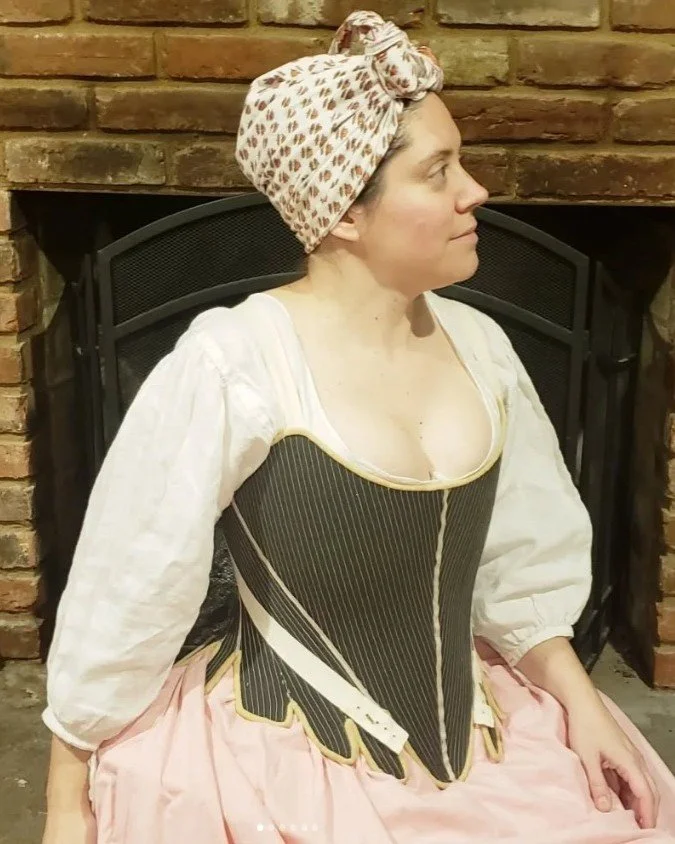
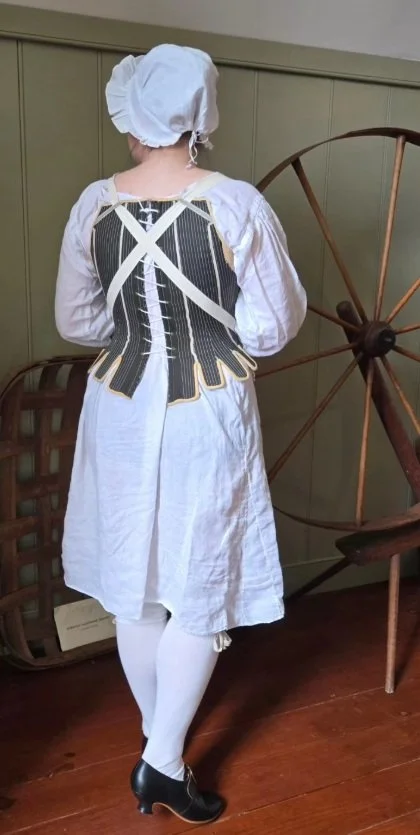
Photos of stays: Sarah Walsh, 2023
Photos of gown: @curlsincostume, 2024
After making just a few minor tweaks I suggested, to refine the shaping through the sides,
she went straight on to make her final stays.
With a solid foundation, she has achieved the comfort, support and silhouette she needs for her historical interpretation work.
2
The customer is a tour guide at a historical site commemorating events in 1746. She does not need to talk to visitors specifically about 18th century clothing. I arc-drafted this pattern based on a pair of stays dated 1735-1750 in the Charles Paget Wade collection held by the National Trust (England).
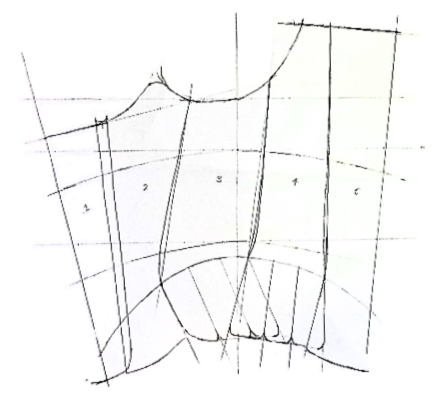
The master pattern I drafted for her
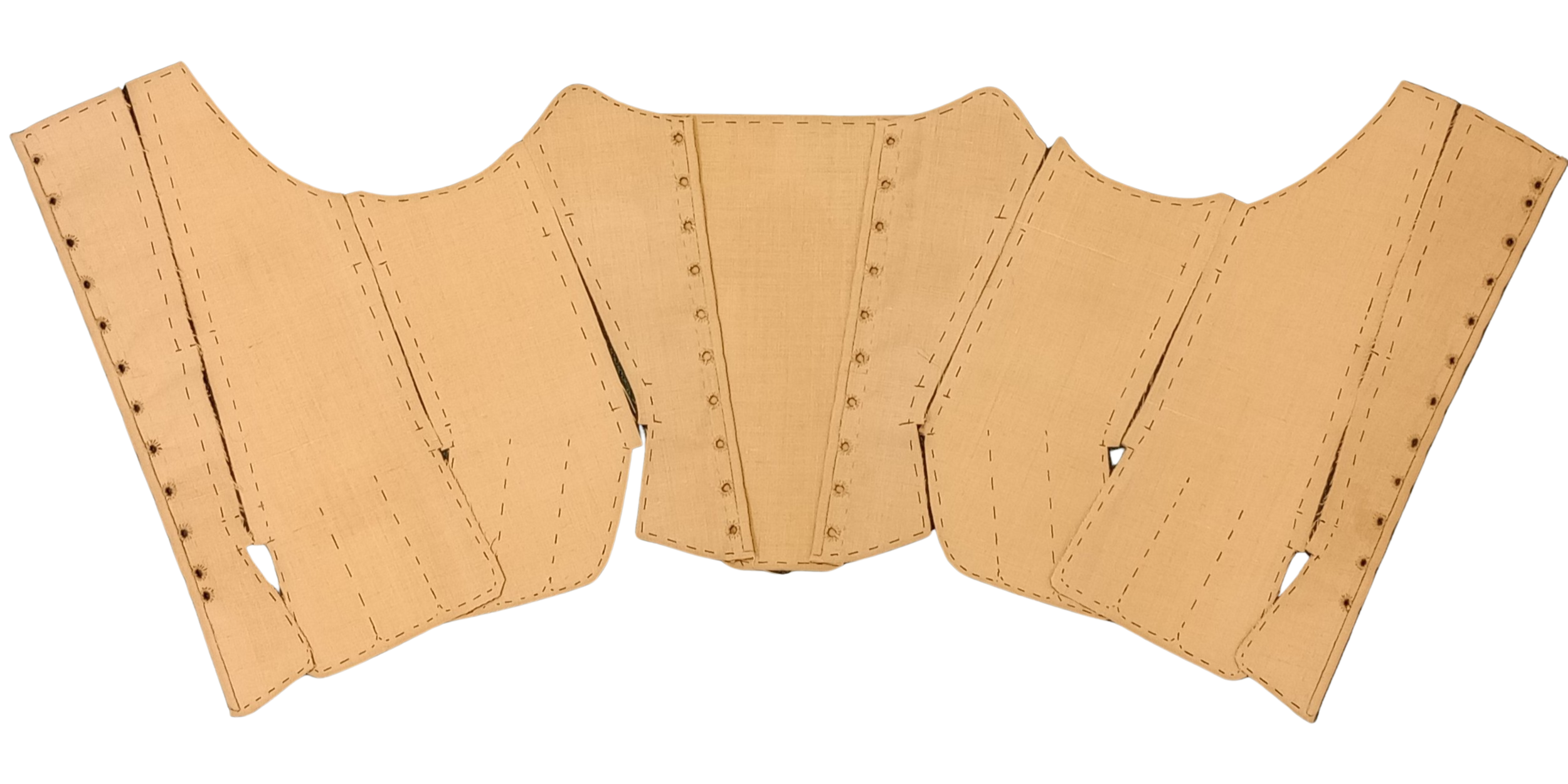
The mock-up: I cut out the strength layers, basted the layers of each panel together and hand-stitched the eyelets for front- and back-lacing. I also provided a boning template. The client’s colleagues at her job inserted all the boning and seamed the panels together.
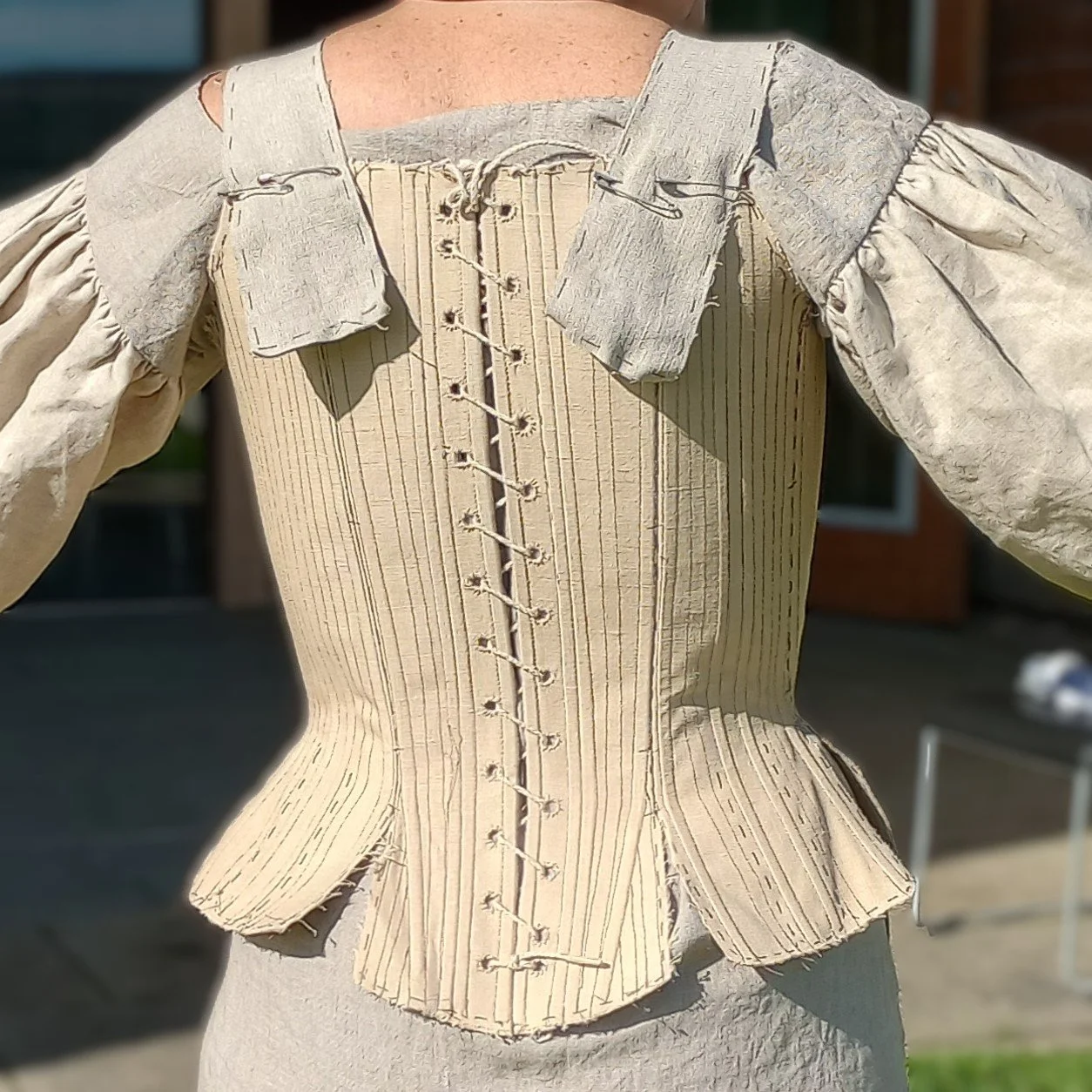
Photo: Rebecca Olds, 2024
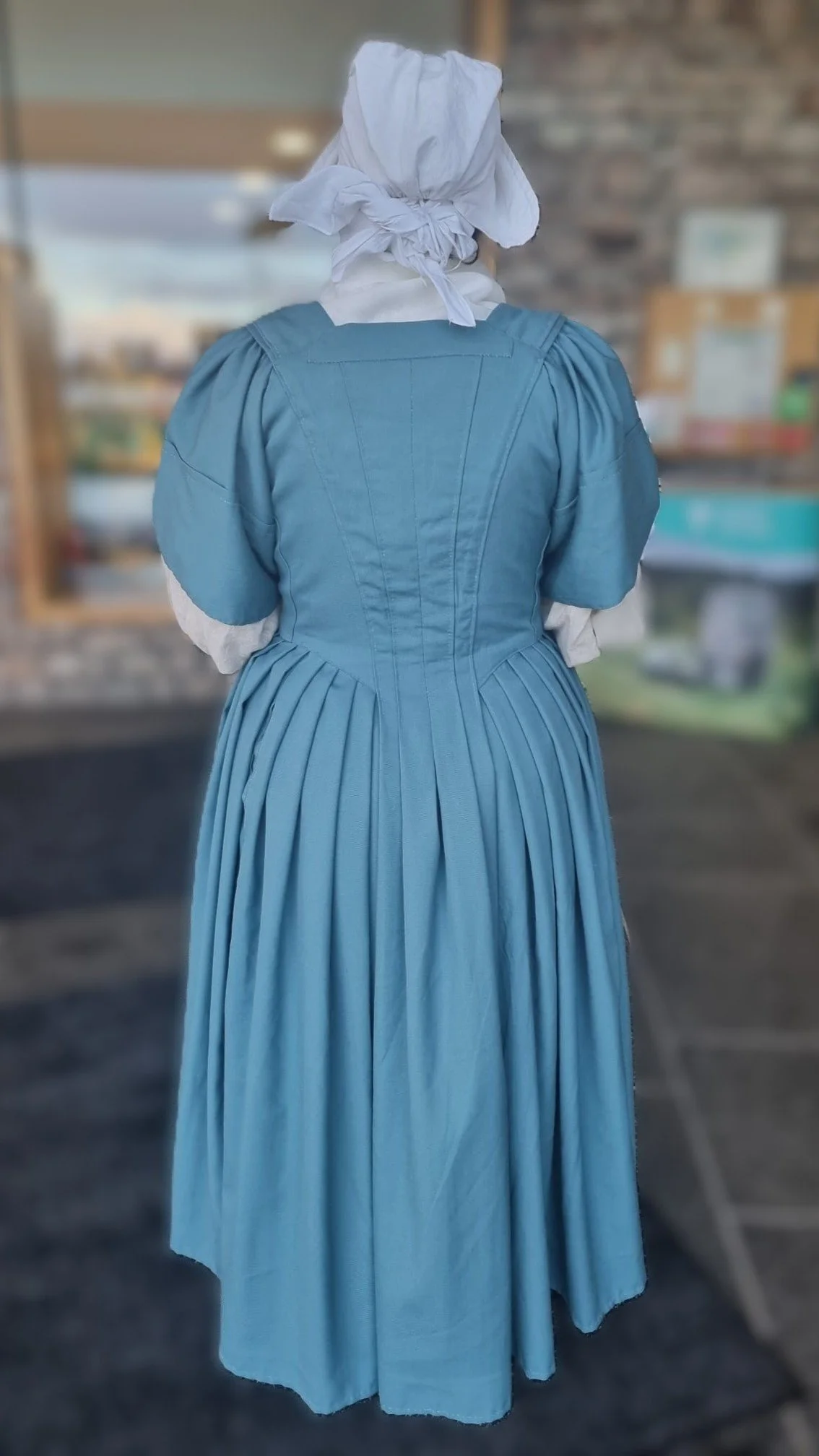
Photo: Tania McClymont, 2024
When the FIRST mock-up fit PERFECTLY, my customer decided to simply bind the edges and begin wearing this ‘wearable mock-up’ exactly as it was, as her final stays under the gown she wears at work (which she made in one of my workshops).
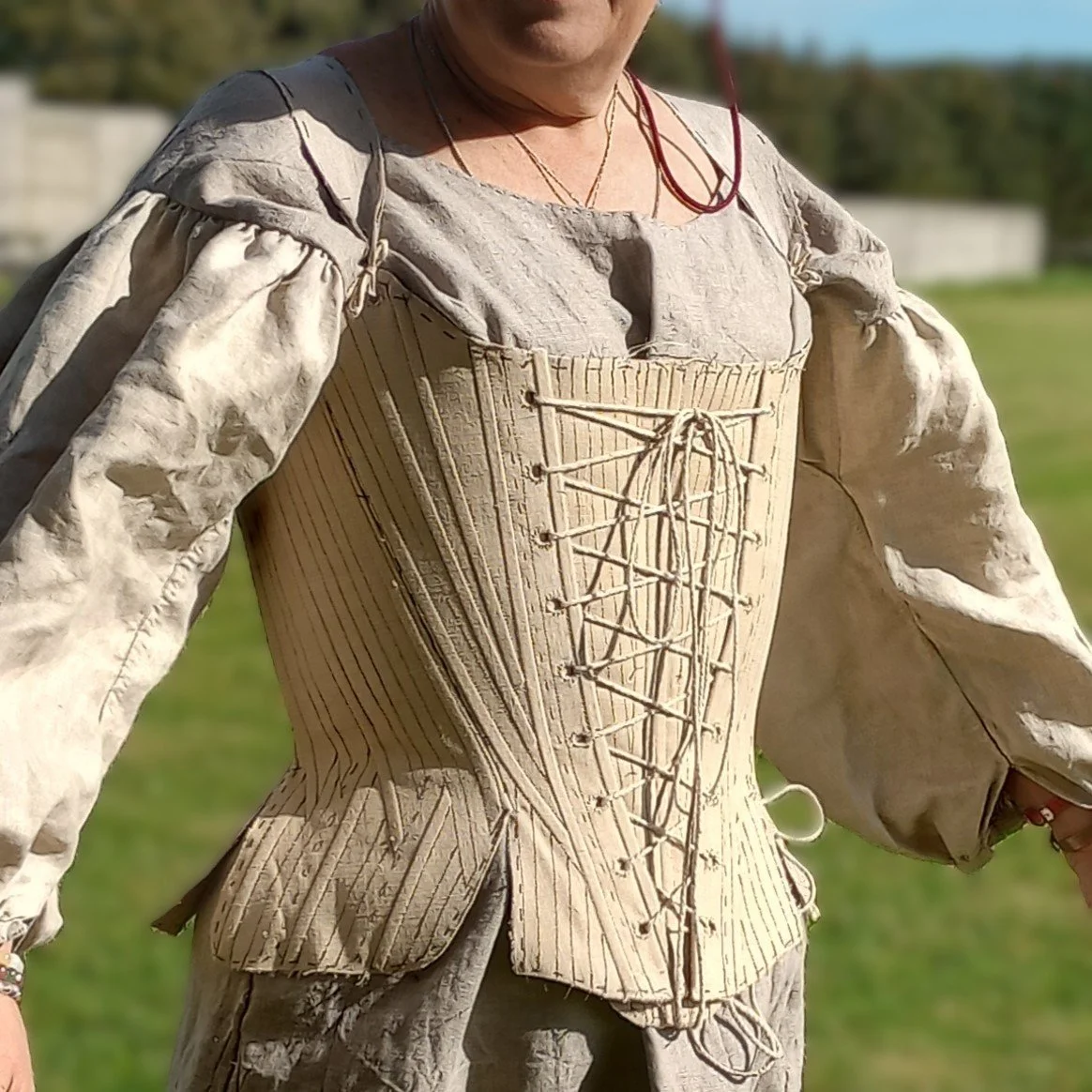
Photo: Rebecca Olds, 2024
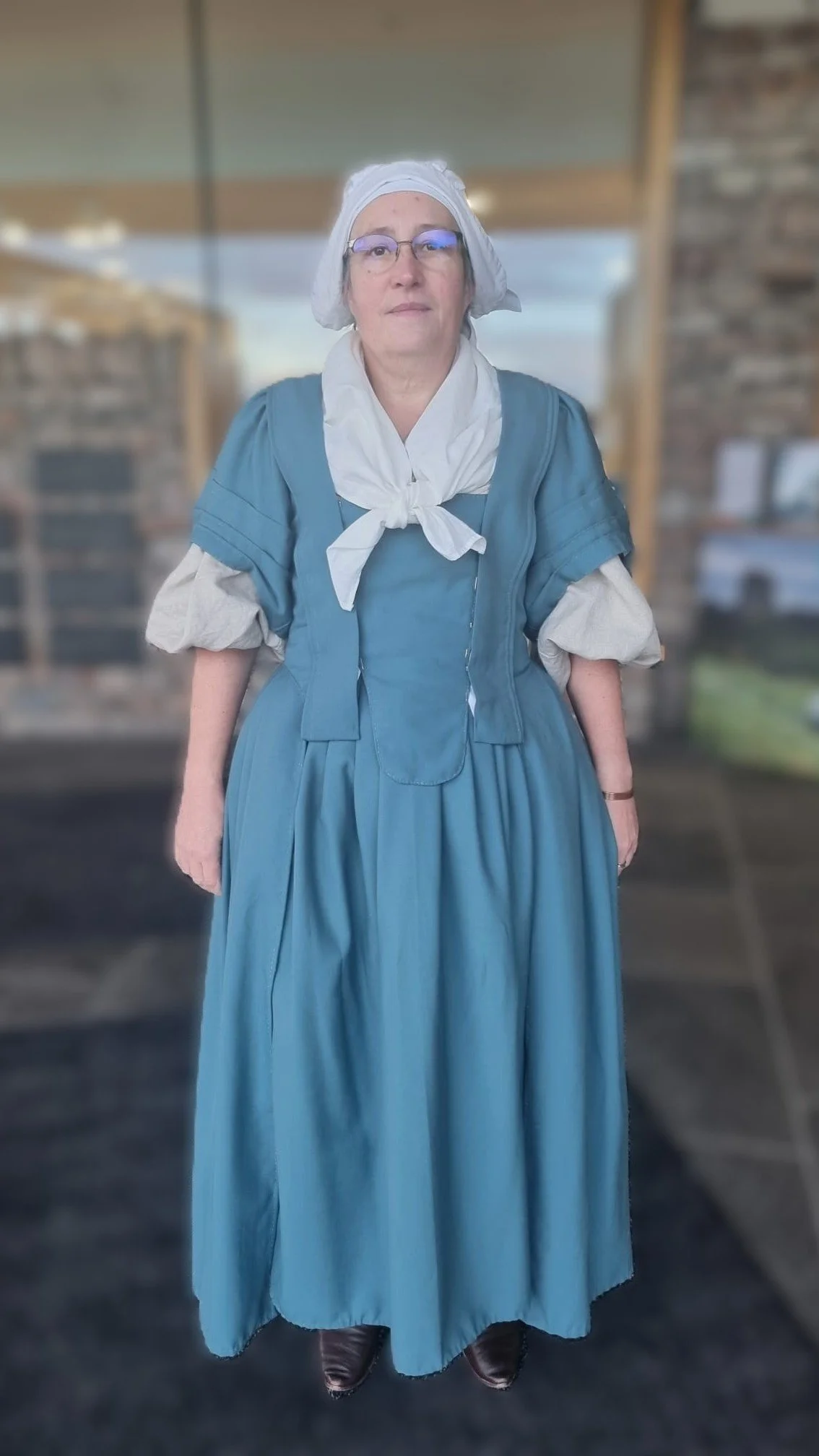
Photo: Tania McClymont, 2024