
In-Person Workshop:
LONG SACK GOWN (circa 1775-1785)
Paxton House, Paxton near Berwick-upon-Tweed, Scotland (UK)
15-19 March 2027
Long Sacks in period images, c.1775-1785
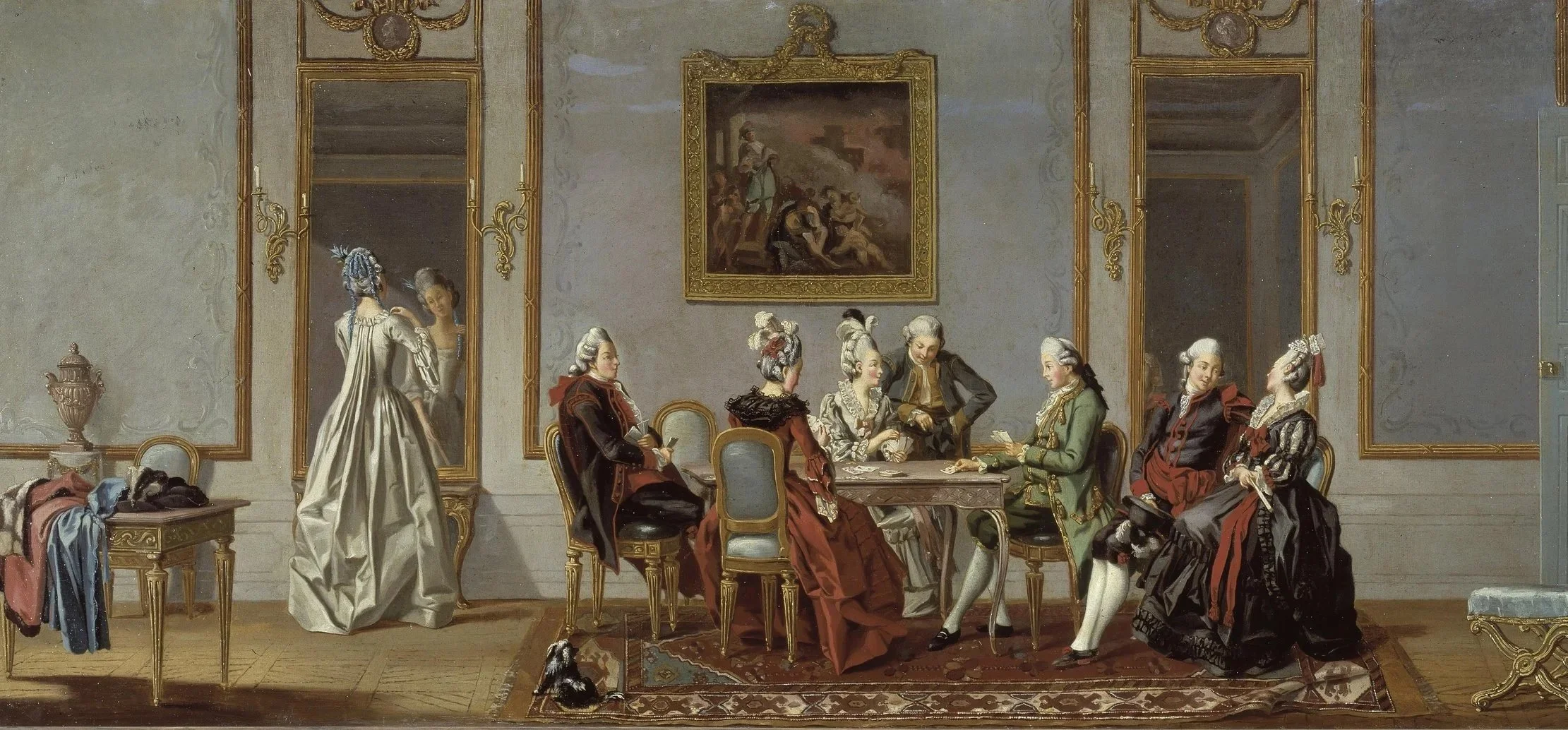
Pehr Hilleström, Gustavian Style Interior with Cardplayers, 1779
Nationalmuseum (Stockholm), Accession No. 2403
Extant Long Sacks c.1775-1785
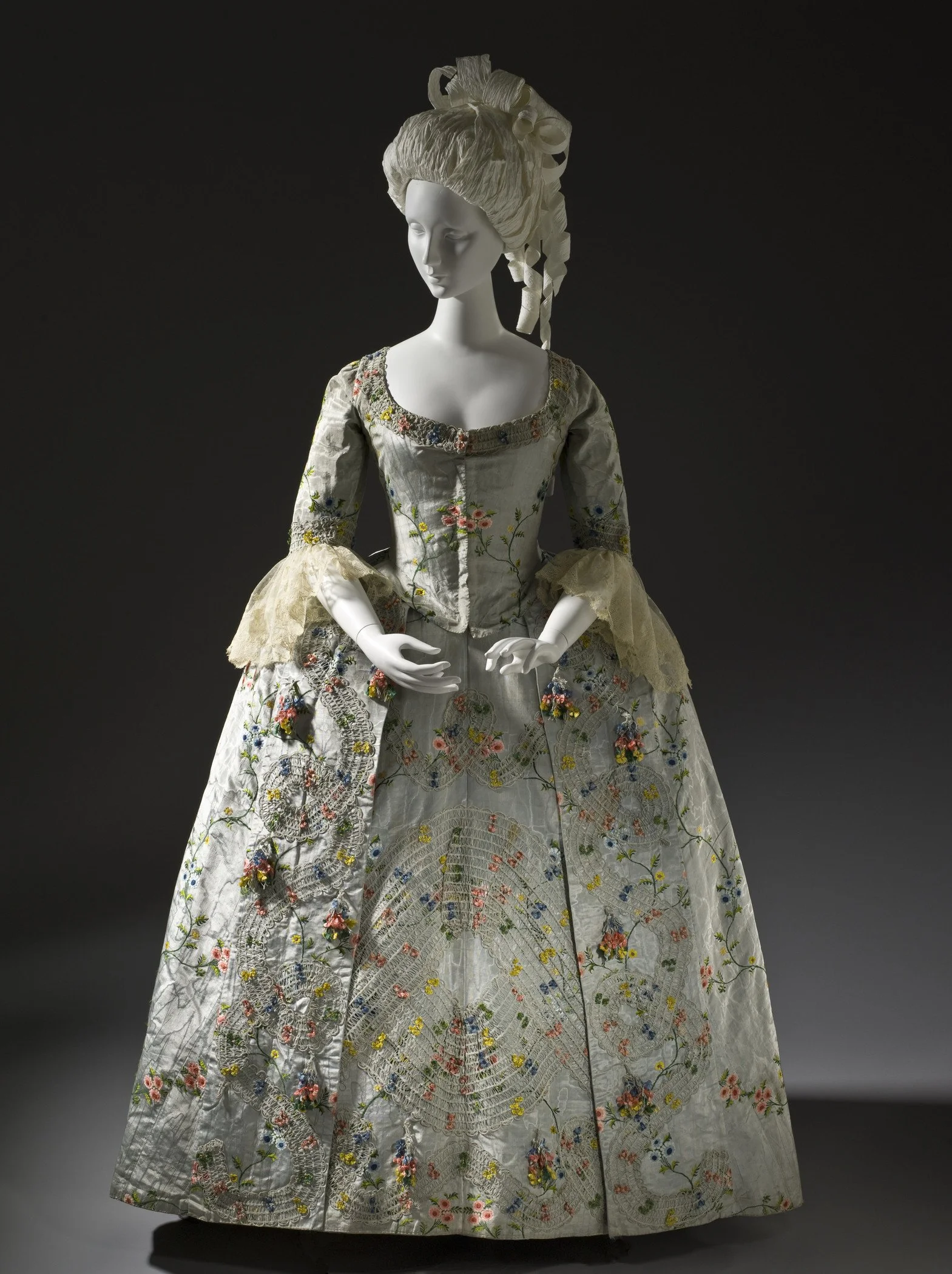
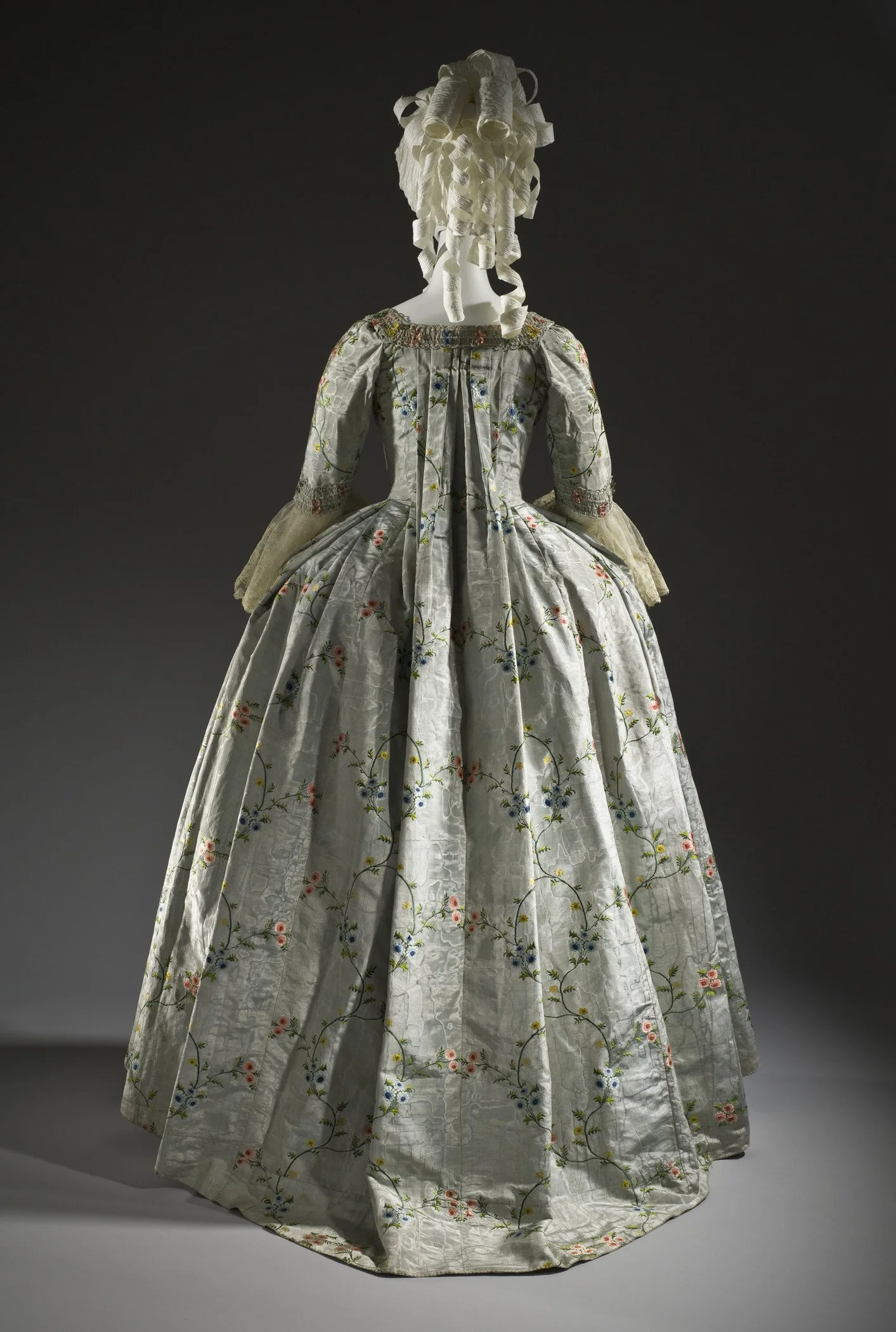
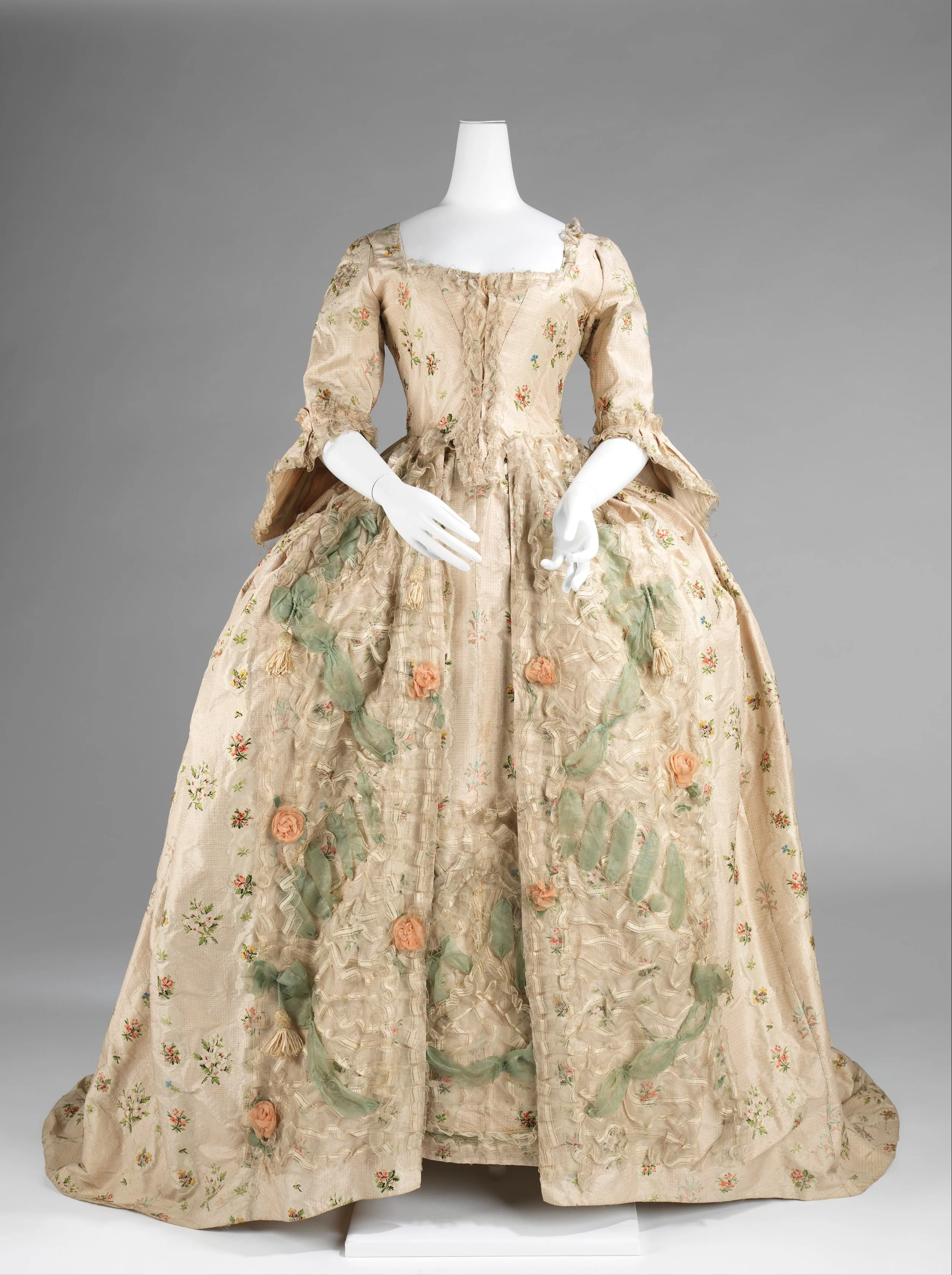
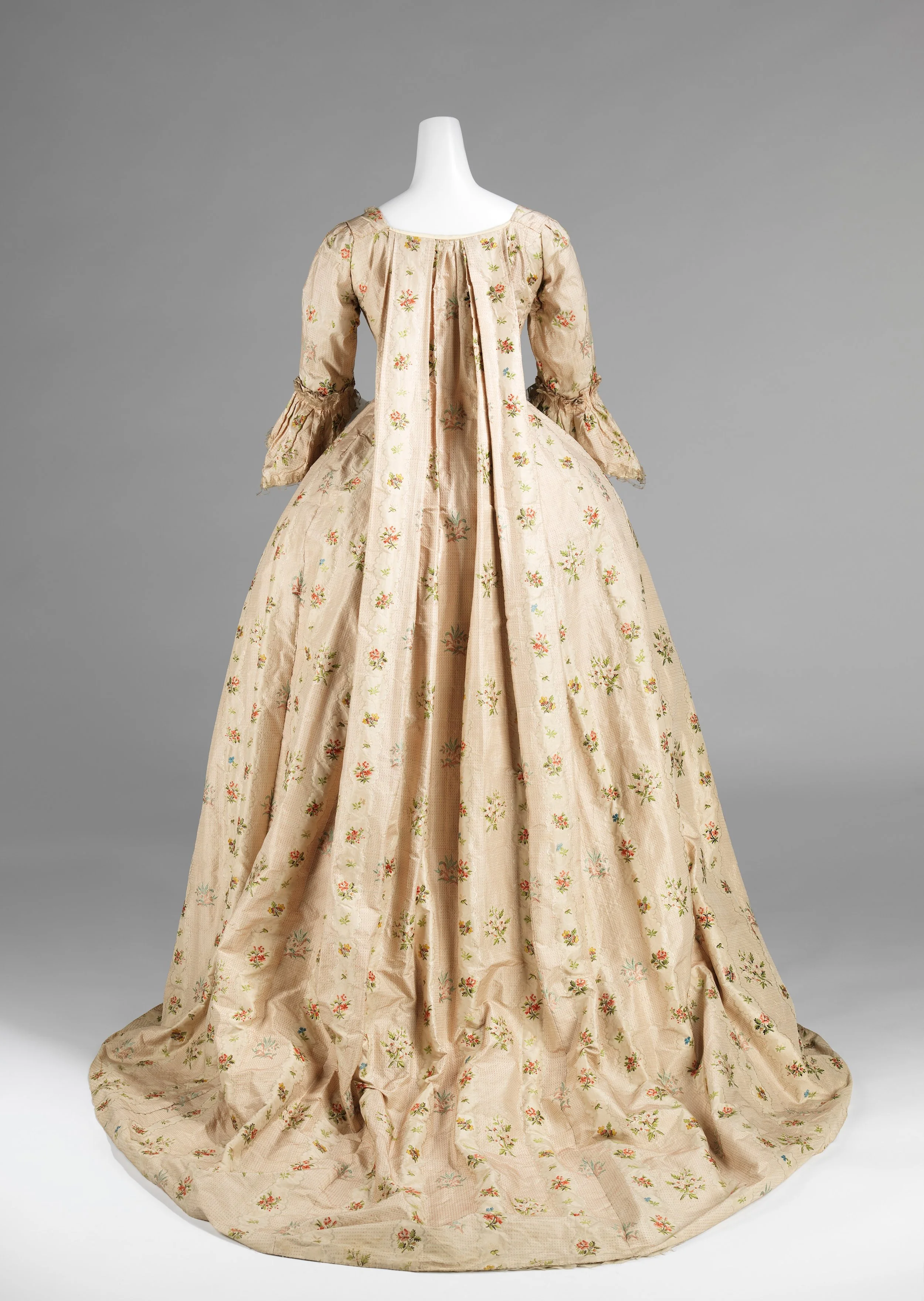
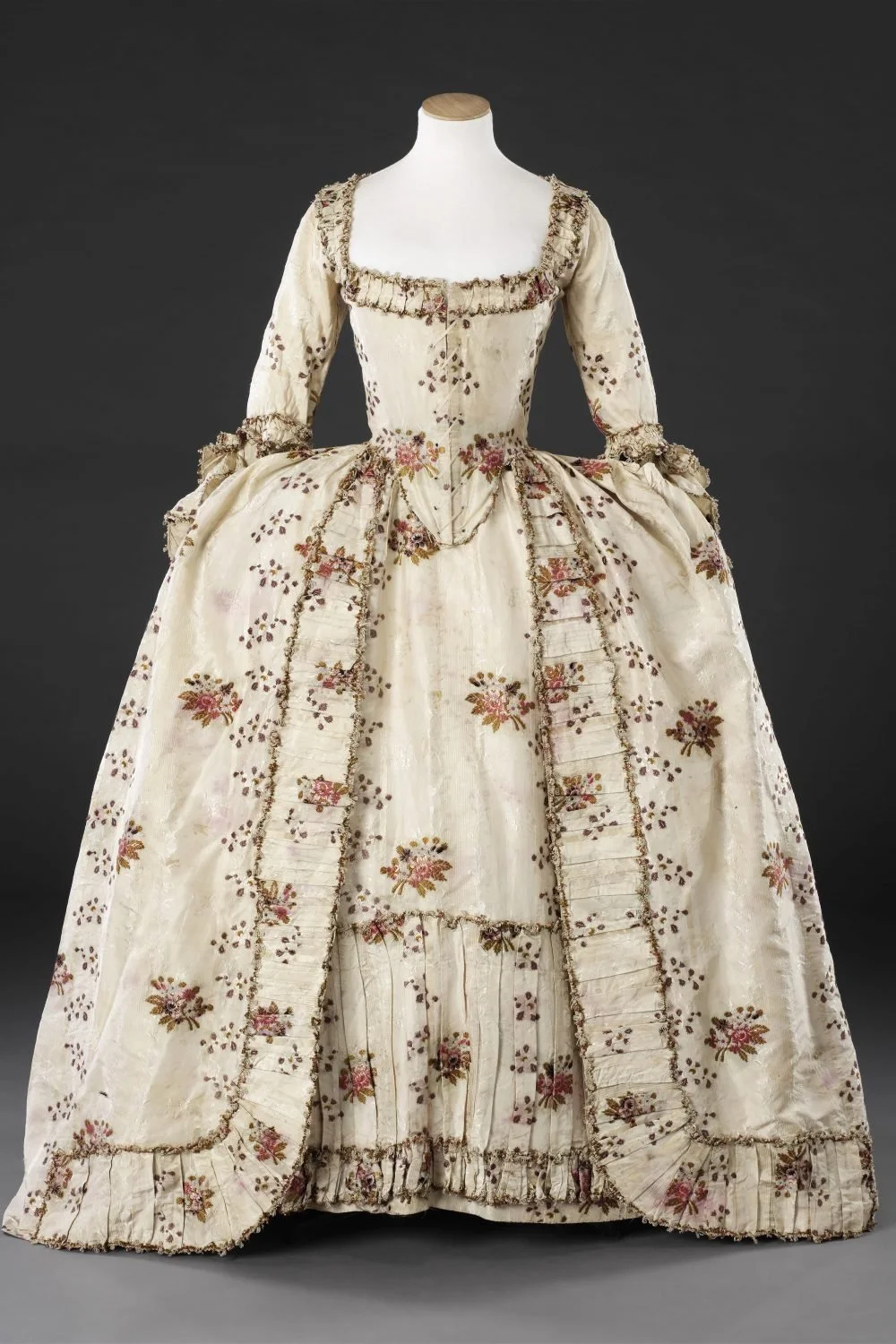
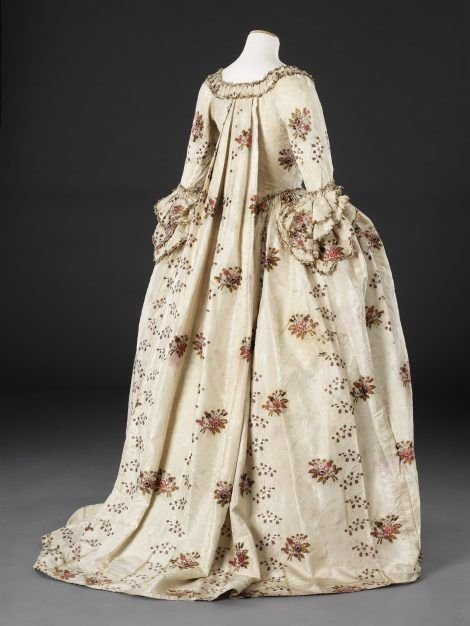
This in-person workshop teaches how to make your own 18th century SACK (often referred to in the 21st century as a “sack-back” or robe a la Française) — entirely hand-stitched, using cutting, fitting and construction techniques as seen in surviving gowns.
This 4 -day workshop is suitable for those new to 18th century gownmaking. We will focus on how to create the iconic pleat structures on the back of the gown. We will accordingly make the bodice fronts in the straightforward close-breasted (centre-front closing) style of the late 1770s and 1780s.
You should be able to complete this workshop with a good understanding of the cut, construction and order of operations for this gown style. You will also gain insight into the changes in thinking about bodice linings - not only how they were cut out, fitted and constructed but also the functions they served. What the lining for a sack gown needed to do was quite different from what women required from the lining of a night-gown or, by the 1780s the explosion of gown styles with seamed rather than pleated backs, and these expectations changed over time.
Students who have previous experience making 18th century gowns will benefit from this opportunity for more hands-on practice supported by Rebecca’s instruction and a fitting buddy. It is also possible for you to explore making a slightly earlier stomacher-front version (without robings) — just let Rebecca know when booking your place on the workshop.
Please note, classes will formally start on Tuesday 16 March 2027. Optional activities (not included in the workshop price) will be available the previous day, Monday 15 March 2027, such as:
personal “Cutting Shapes to the Figure” service with Rebecca, if you include this in your workshop booking request. (A few slots for this may be available on Sunday, 14 March 2027, as well.)
a curator-led tour of our venue, Paxton House, one of Britain’s finest Palladian houses, built between 1758 and 1795. Inside and out, Paxton’s architecture and interiors showcase the finest in Georgian aesthetics and fashionable taste, incluing a rare and historically significant collection of mid-century men’s coats and waistcoats. Our tour will also include a behind-the-scenes visit to Paxton’s costume stores, where you will see a heavily altered sack gown in the collection, of 1760s Spitalfields brocaded silk, which has inspired our choice of gown style for this workshop.
exploring the sights of Berwick-upon-Tweed, founded as an Anglo-Saxon settlement which in the intervening centuries weathered many battles between Scotland and England to lay claim to its strategic ports. Walk its medieval town walls and Elizabethan ramparts, and view its fine Georgian Town Hall and Britain’s earliest barracks buildings (built by Nicholas Hawksmoor in 1717-1721).
PLEASE REFER BACK TO THE MAIN GOWN WORKSHOP PAGE
FOR DIRECTIONS ON HOW TO BOOK THIS WORKSHOP.
A note on silhouette and suitable skirt supports:
By 1770, long sack gowns were becoming a little ‘fossilised’, that is, not changing very much or keeping in step with wider fashions (which were beginning to move faster and faster with an explosion of new styles). it remained a popular style as formalwear, though not as courtwear.
The short sack or pet en l’air of the 1770s was much more fashionable than the long sack, being one of many perky ‘jacket’ daywear options, often styled in similar ways to the robe a la Polonaise and other Turkish-inspired garments.
The silhouette for both long and short sacks retained the focus on wide hips that had been in vogue since mid-century, but with added fullness over the rump (unlike the ‘flat backside’ of the 1740s and 1750s). Achieving the 1770s shape starts with a set of pocket hoops. Ideally, you should add a small bum pad under your hoops. This should be wide enough to reach over both of your hips, but with the padding distributed to be fullest at the centre of the back and gradually thinner on each side as the pad disappears under the pocket hoops. The Scroops/Virgil’s Fine Goods “Frances” pattern is an excellent shape to achieve the right look, and it is available in both paper and digital format.
Your petticoat will need to be cut and constructed to fit correctly over your skirt supports. Rebecca can discuss this with you further, as needed, during the workshop booking process.
Venue environment
This workshop is being held in a large gallery on an upper floor of an 18th century house in Scotland. All environmental conditions (temperature, humidity, ventilation) are compliant with UK law. Access to the gallery is via an external staircase from an ex-stables courtyard. There is no lift. Modern toilets including accessible toilets are located on the ground floor of the house wing on the other side of the courtyard - so access during the workshop requires exiting the gallery, descending external stairs, crossing an open courtyard and entering the ground-floor wing opposite the stairs.
Workshop conditions
Each participant will be provided with a table (approx 160×75) and a folding chair.
Some work, such as fittings, may require periods of standing. Participants should be prepared for durations of standing from 15-45 minutes at a time, 1 or 2 times each day, most if not all every day of the workshop, with the possibility that the final day may involve more.
The floor is hardwood i.e. uncarpeted.
Windows in the gallery are all located on the western wall, so natural lighting will be strongly directional and of varying intensity depending on time of day and weather outside. Note that workshop dates fall within British Standard Time before the clocks advance for summer.
Food & Drink
I have arranged for the venue to provide a self-serve station within our workshop space, with teas and coffee and a trayback with a selection of biscuits and cakes.
Participants will need to bring their own lunches.
The venue will advise nearer the time whether the cafe on-site will be open the week of our workshop - which is before the House officially opens for the 2027 season.